Randy's Rodeo
music that rocks, rolls, swings, and twangs
| Artist Index | Song Index | Radio | Home |
|
Music Reviews Special Features Information Support Me |
Sock it to me, Santa!
Julian "Cannonball" Adderley recorded prolifically for 21 years (1955-1975), playing with a who's who of jazz, including John Coltrane, Bill Evans, Art Blakey, Horace Silver, and Miles Davis. Cannonball earned his bones, in fact, as a member of the legendary Davis sextet that recorded Kind Of Blue, Milestones, and Porgy & Bess (1958-59), and Davis' contribution to Adderley's 1959 Blue Note LP, Somethin' Else, helped make it an indisputable jazz classic; grudgingly perhaps, the Penguin Guide gives it four stars - their highest rating. But, Cannonball was very popular with the general public, thanks in part to his ingratiating personality. During concerts, he would launch into lengthy, humorous, spoken introductions that clearly pleased his audience. His success, however, was mostly due a series of catchy, rock-solid singles he recorded in the years following his high profile work with Miles Davis. These include "African Waltz" (1961), "Jive Samba" (1962), "Save Your Love For Me" (with Nancy Wilson, 1962), and one of the all-time great jazz hits, "Mercy Mercy Mercy" (1966). On top of that, Cannonball's brother and longtime bandmate, cornet virtuoso Nat Adderley, wrote "Work Song" in 1960. In addition to being a cornerstone of the Adderley's live set, it became a big hit for Herb Alpert in 1966 and - arguably - a jazz standard. [close]
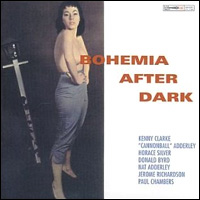
An alto saxophone player, Cannonball Adderley was inevitably influenced influenced by post-war giants Charlie Parker and Benny Carter. By the mid-50's, he was moonlighting from his job as a high school band director in a group with his brother, Nat, in their native Florida. While visiting New York, he and Nat sat in with Oscar Pettiford and were subsequently signed to Savoy Records. Before long, Miles Davis tapped Cannonball to play alongside John Coltrane in that immortal sextet. Following following his stint with Miles, Adderley picked up where he has left off, playing with his brother. Over the years, the Adderley siblings performed in a variety of settings, from small groups to big bands, but their best and most popular sides were recorded by quintets and sextets that, over the years, included Joe Zawinul (who wrote "Mercy"), Charles Lloyd, and Bobby Timmons. But, I'm getting ahead of myself. In 1955, Adderley and his brother participated in several hard bop sessions for Savoy that featured a rotating cast of soon-to-be-legends, including Kenny Clark, Horace Silver, Donald Byrd, and Hank Jones. The sessions yielded (at least) three different albums: most famously Bohemia After Dark, but also Cannonball's and Nat's respective debuts, Presenting Julian Cannonball Adderley and That's Nat. These sessions have been reissued many times - most expansively on Summer Of '55 (1999) and most concisely on Spontaneous Combustion (2006), or on any number of other Savoy reissues.
During his tenure at EmArcy, some of Cannonball's recordings were jointly released through Mercury to give him greater exposure. After EmArcy was shuttered - and Adderley began scoring hit singles for other labels - Mercury began reissuing the EmArcy albums under a variety of titles new and old. Adderley And Strings, for example, became The Lush Side of Cannonball (1962). More significantly, the label compiled unreleased sides from several 1957 and 1958 sessions as Cannonball's Sharpshooters (1959) Cannonball EnRoute (1961). As an overview of this rich, relatively neglected period, pick up Verve's The Ultimate Cannonball Adderley (1999) which brings together highlights from all the EmArcy and Mercury recordings, including the fabled quintet sessions with John Coltrane (see below) and a 1962 date with Ray Brown. In the alternative, look for Verve Jazz Masters (1994) or Cannonball Adderley's Finest Hour (2001).
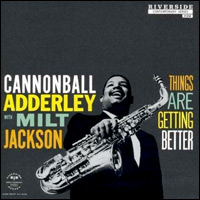
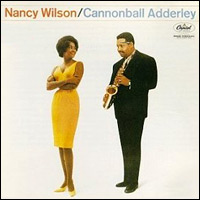
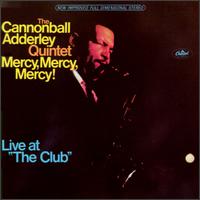
Around this time, Adderley began a productive sojourn at Riverside Records (from 1958 till the label went bust in 1963) marked by popular singles like "This Here," "African Waltz," "The Jive Samba," "Work Song," and "Waltz For Debby" (with Bill Evans). Among the standout studio albums from these years are his Riverside debut, Portrait Of Cannonball (1958); Things Are Getting Better (a tremendous date with vibraphonist Milt Jackson, Art Blakey, and Wynton Kelly, 1958); Them Dirty Blues (1960); Poll Winners (with Ray Brown and Wes Montgomery, 1960), and Know What I Mean? (with Bill Evans, 1961). Also of note are In San Francisco (1960) and In New York (1962), which showcase the live power and spontaneity of Adderley's Quintet and Sextet, respectively. Milestone's Greatest Hits: The Riverside Years collects highlights from this period - though way too short, it's an excellent jumping-off point, or an ideal taster for the casual fan. But, avoid Riverside's The Very Best Of Cannonball Adderley, which tosses in a couple of tracks from Adderley's brief tenure at Fantasy Records in the mid-70's, without providing much context. During this period, Adderley also waxed the popular Nancy Wilson & Cannonball Adderley (1962) for Capitol, and it was Capitol that snatched up Cannonball (and much of his back catalog) after Riverside folded. During these years, Adderley settled into a pleasant, easy groove - though he inarguably continued to produce good music. The first Capitol releases, Jazz Workshop Revisited (an excellent 1962 live date), Cannonball Takes Charge (an authoritative 1959 studio session), and Cannonball's Bossa Nova (featuring Sergio Mendes) were originally recorded for and/or released by Riverside. But, his surprising Fiddler On The Roof (1964) was all new. Soon, the 1966 single "Mercy Mercy Mercy" gave Adderley the biggest hit of his career, peaking at #11 Pop and #2 R&B. The accompanying 1967 LP was also a hit, and it was billed as "Live At The Club," purportedly recorded at Club DeLisa in Chicago. In fact, it was recorded at recorded at the Capitol Tower in Hollywood with a studio audience and an open bar - which partly explains their boistrous enthusiasm....
Adderley continued to record for Capitol until 1972, and then switched to Fantasy for the last three years of his life. All told, the recordings of Cannonball Adderley are many and varied; as many as we've discussed here, there are dozens more (see below). Collecting Cannonball, then, becomes a daunting task. Thankfully, some good compilations exist to expedite the process - though none are any more comprehensive than the all-too-brief Definitive Cannonball Adderley. Together, five discs - Spontaneous Combustion (Savoy), Ultimate (Verve), Somethin' Else (Blue Note), Greatest Hits (Fantasy), and Capitol's Best Of (which overlaps slightly with Fantasy's set) - provide a good start, comprising an ad hoc boxed set (sans box) that surveys most of Adderley's prolific catalog. Plus, a huge amount of Cannonball's repertoire is now available for download, making it easier to fill in the gaps. Beyond that, jazz buffs will find a cornucopia of albums to dig - most reissued on CD more than once. [top of page]
Your witty comments, impertinent questions, helpful suggestions, and angry denials are altogether encouraged. Submit feedback via email; submissions will be edited and posted at my discretion. |
|
|||||||||
Navigation Artist Index Song Index Randy's Radio Home Top Of Page Music Reviews Alternative Blues Books Christmas Classic Rock Country Jazz Lounge Special Features History Of Randy's Rodeo Sex Pistols Motown Records Halloween Valentine's Day Information About Me Feedback Links User's Guide Support Me Amazon iTunes Sheet Music Plus © 1999-2024 Randall Anthony, www.hipchristmas.com and www.randysrodeo.com
|
|||||||||||
 Visit my other website, www.hipchristmas.com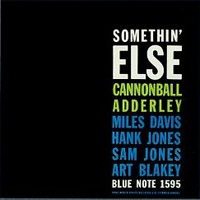
 Selected Cannonball
Adderley Albums
Selected Cannonball
Adderley Albums Essential Cannonball
Adderley Songs
Essential Cannonball
Adderley Songs The Cannonball
Adderley Bookshelf
The Cannonball
Adderley Bookshelf Cannonball
Adderley On The Web
Cannonball
Adderley On The Web Feedback


